

In response to the challenges of a super-aged society, the Chi-Mei Geriatric Emergency Team initiates holistic assessments at the frontline of emergency care and has established five core care strategies:
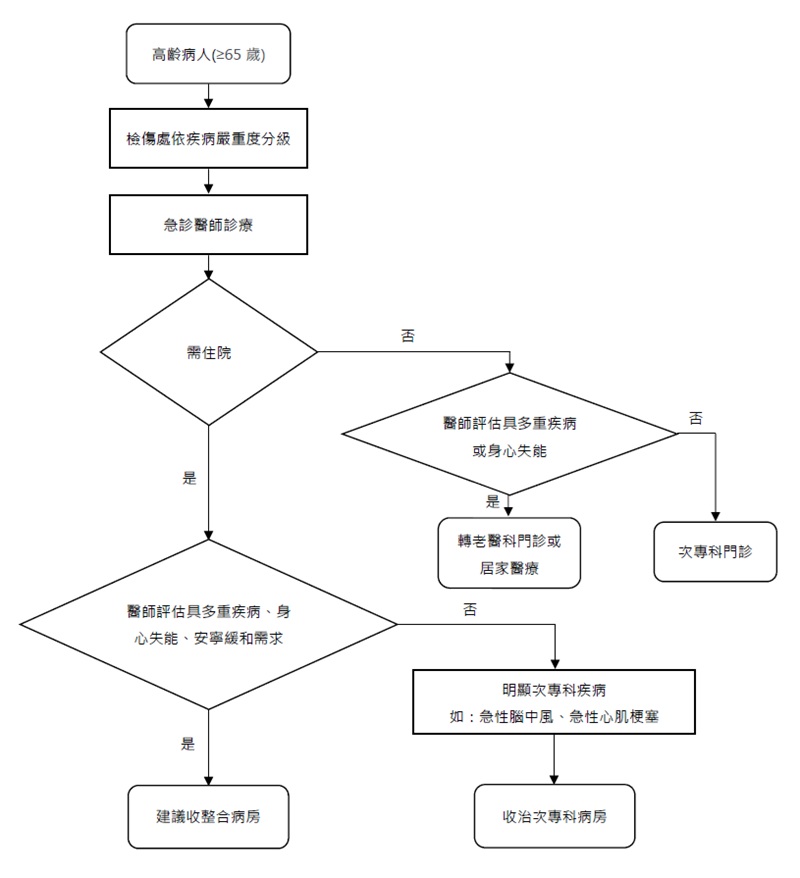
- Screening and Referral for Older Adults with Multiple Chronic Conditions and Physical or Cognitive Impairments in the Emergency Department.
We conduct comprehensive geriatric assessments (CGA) for older patients presenting to the emergency department, addressing geriatric syndromes, multiple chronic conditions, physical and cognitive impairments (such as frailty, dementia, delirium, and decline in activities of daily living), as well as palliative care and home-based medical care needs. Through timely intervention by our multidisciplinary team, patients are transitioned to integrated care wards, geriatric medicine outpatient clinics, or home-based healthcare teams as appropriate, ensuring continuity of geriatric care while promoting functional recovery and aging in place.
-
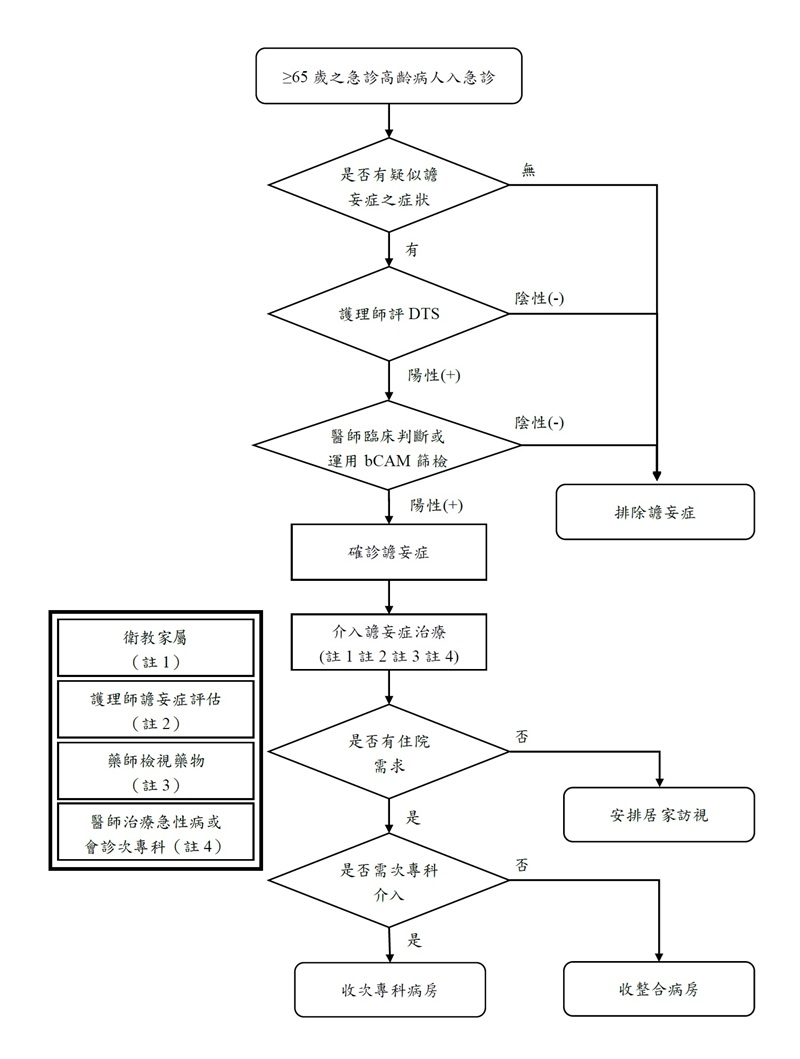
Computer-Assisted Delirium Screening and Management in the Emergency Department
Delirium in older patients presenting to the emergency department is associated with a 62% increase in mortality and a 2.3-fold increase in hospital length of stay. Despite a reported prevalence of 8%–17% in emergency departments, only 16%–35% of cases are successfully diagnosed in clinical practice, highlighting the substantial underrecognition of this condition. To address this clinical challenge, the Chi-Mei Geriatric Emergency Team has implemented the Delirium Triage Screen (DTS) and the brief Confusion Assessment Method (bCAM), as recommended by U.S. geriatric emergency care guidelines, through staff education, multidisciplinary collaboration, and integration with hospital information systems. Both screening tools have been fully digitized to facilitate their use in clinical practice. Through computer-assisted diagnosis and timely multidisciplinary intervention, the team has significantly improved early delirium detection and treatment outcomes, contributing to reduced mortality and disability among older adults and enhancing patient safety in emergency care.
-
Emergency Department Home-Based Medical Care and Discharge Planning Services
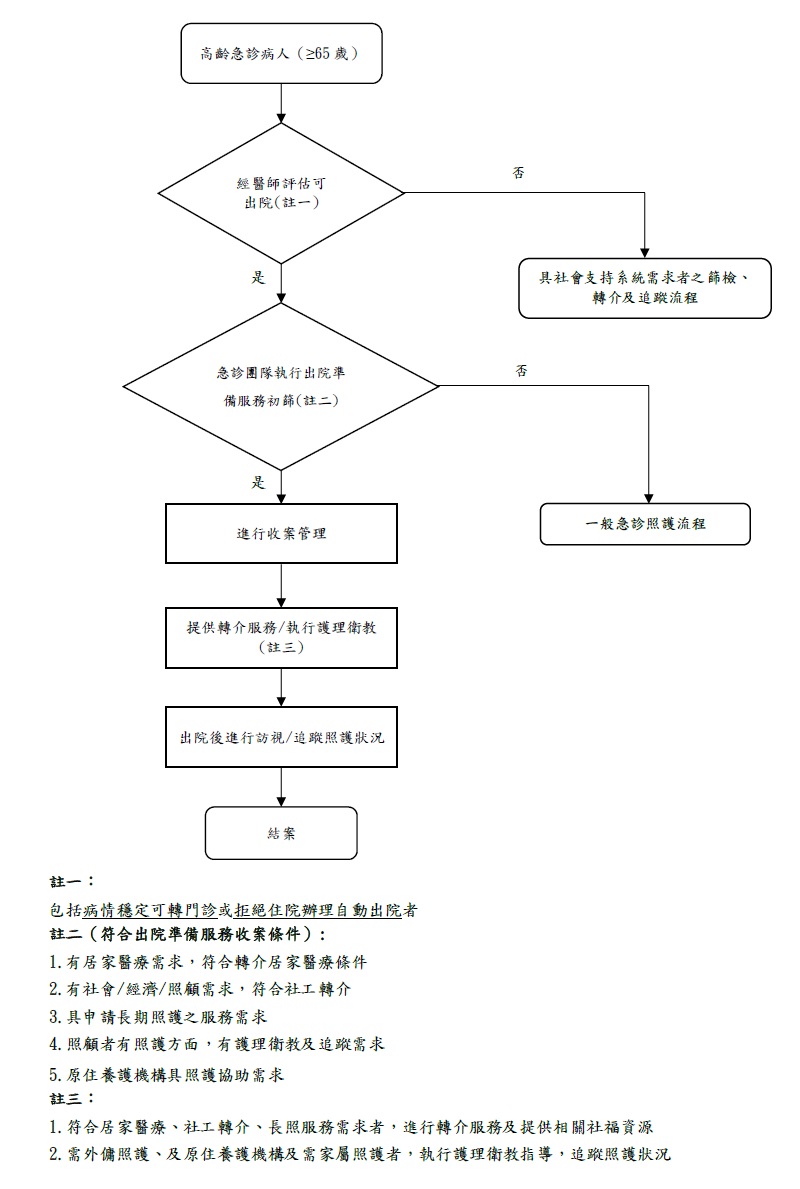
Many older adults face difficulties accessing medical care due to limited mobility, chronic illnesses, or family caregiving circumstances. Breaking away from the traditional restriction of home-based medical care to patients discharged from inpatient hospitalization, the Chi-Mei Geriatric Emergency Team pioneered home-based medical care services for patients discharged directly from the emergency department. For older patients who, following physician assessment, do not require hospitalization, are unable to obtain an inpatient bed, or have difficulty returning for outpatient follow-up visits, emergency physicians and home nursing teams proactively extend their services into communities and patients' homes, providing timely and compassionate home-based medical care.
To further strengthen continuity of care, our team has enhanced the Emergency Department Discharge Planning Services program. Before older patients leave the emergency department, transitional care nurses intervene early to conduct comprehensive assessments of caregivers' abilities and coordinate appropriate resources, including home-based medical care, social work referrals, patient and caregiver education for institutional care, and Taiwan's Long-Term Care Plan 2.0. Through this integrated, one-stop approach, we ensure seamless connections between healthcare services and social welfare resources upon discharge, effectively reducing the caregiving burden on families and putting the core principle of “aging in place” into practice.
-
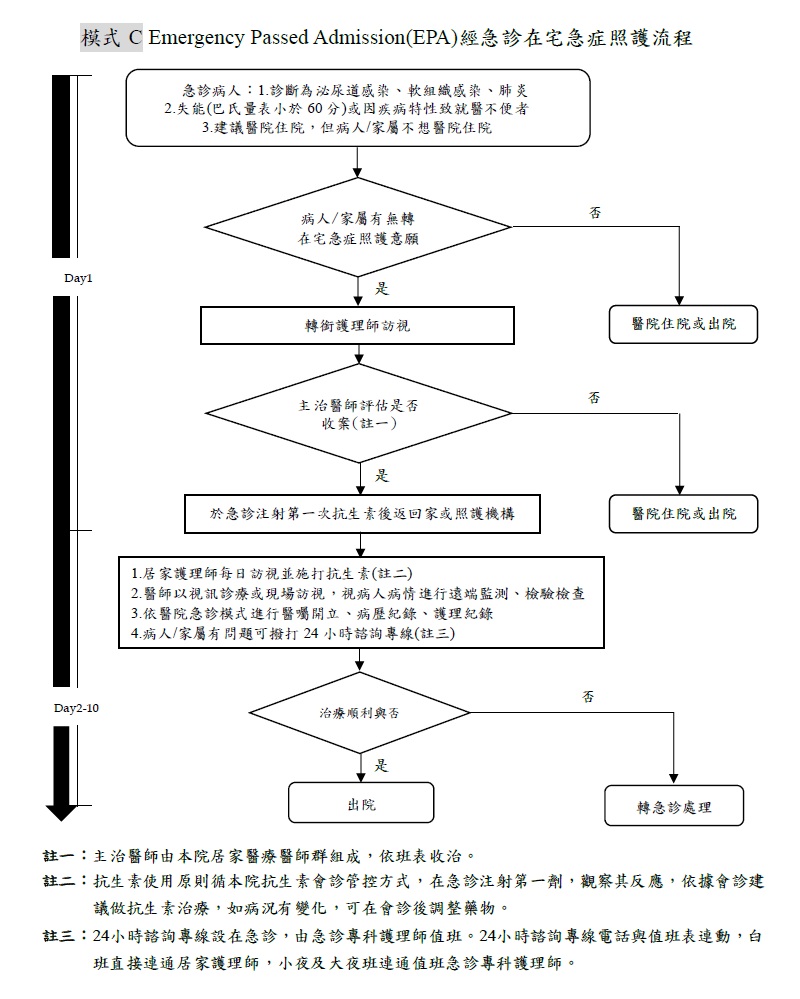
Hospital at Home (HaH)
Since August 2024, Chi Mei Medical Center has implemented the Hospital at Home (HaH) care model for patients diagnosed with pneumonia, urinary tract infections, or soft tissue infections who meet eligibility criteria, such as functional disabilities or difficulties accessing medical care. Following a comprehensive assessment by the medical team, eligible patients are referred to the program. Through home visits by transitional care nurses, confirmation of patients' willingness to participate, explanations of treatment plans, and guidance on using remote monitoring equipment, patients and their families are supported in understanding the home-based care model, ensuring a smooth transition of medical services from the hospital to their homes.
During the initial home visit, the attending physician and home care nurse jointly conduct a clinical assessment and initiate antibiotic treatment. Subsequently, home care nurses provide daily visits, medication administration, and health monitoring, while case management and real-time communication mechanisms enable the team to closely monitor changes in patients' conditions. The team has also established a 24-hour consultation hotline and an emergency transfer system to ensure that patients receiving treatment at home have access to timely and safe medical care.
The program brings together specialist physicians from the Department of Emergency Medicine, Department of Family Medicine, Division of Infectious Diseases, Division of Nephrology, Division of Pulmonary Medicine, and Division of Palliative Medicine, working alongside nurses, respiratory therapists, pharmacists, radiologic technologists, social workers, and administrative support staff. This interprofessional and interdepartmental collaboration model, supported by clearly defined professional responsibilities, timely handovers, and coordinated resources, provides comprehensive services encompassing medical diagnosis and treatment, medication management, respiratory care, and social support, ensuring patient-centered continuity of care.
Furthermore, the team actively integrates smart healthcare technologies, including Internet of Things (IoT)-enabled remote vital signs monitoring, smart patient–provider communication platforms, and hospital information systems, to monitor patients' health conditions in real time. Portable X-ray machines, ultrasound devices, electrocardiogram (ECG) machines, and 24-hour continuous infusion devices are also available to enhance the timeliness and safety of home-based medical care. Through multidisciplinary collaboration and the application of smart healthcare technologies, the program improves the efficiency of healthcare resource utilization while advancing its vision of age-friendly care: “Uninterrupted Medical Care, Uninterrupted Caregiving, and Uninterrupted Daily Life.”
-
Outpatient Parenteral Antimicrobial Therapy (OPAT)
Since February 2025, Chi Mei Medical Center has implemented Outpatient Parenteral Antimicrobial Therapy (OPAT), offering a more flexible and convenient approach to infection management by providing an alternative to hospitalization for intravenous antibiotic treatment. Patients with infections who are clinically stable and meet the eligibility criteria, as determined by the medical team, can receive intravenous antibiotics in an outpatient setting and return home after each daily treatment session. This approach maintains treatment safety and effectiveness while allowing patients to continue their daily routines and benefit from family support.
To strengthen continuity of care, our hospital has integrated emergency, outpatient, and inpatient care resources to establish three service pathways: direct initiation in outpatient clinics, referrals from the emergency department, and early discharge of hospitalized patients. Through collaboration among physicians, nurses, and relevant healthcare departments, we have developed an interprofessional integrated care and transition system. Physician assessments, patient education provided by transitional care nurses, and case management support patients throughout enrollment, treatment planning, and outpatient antibiotic administration. The nursing team continuously monitors vital signs, infection markers, and medication responses, while ensuring proper intravenous catheter management and prompt intervention when abnormalities arise, allowing patients to receive safe medical care outside the inpatient setting. Through comprehensive treatment planning and ongoing follow-up, patients return to the hospital regularly for intravenous antibiotic administration, ensuring the safety and continuity of treatment. This care model helps reduce unnecessary hospitalizations, alleviate emergency department overcrowding and inpatient bed pressures, improve healthcare resource utilization, and enhance patients' quality of life, while promoting the principles of patient-centered continuity of care.